The Films
Filmography
| Year | Title | Role/Impact | Type |
|---|---|---|---|
| 1926 | Self-Portrait in a Velvet Dress | Art | |
| 1939 | The Two Fridas | Art | |
| 1944 | The Broken Column | Art | |
| 1954 | Viva la Vida | Art | |
| 2002 | Frida (Film) | Film |
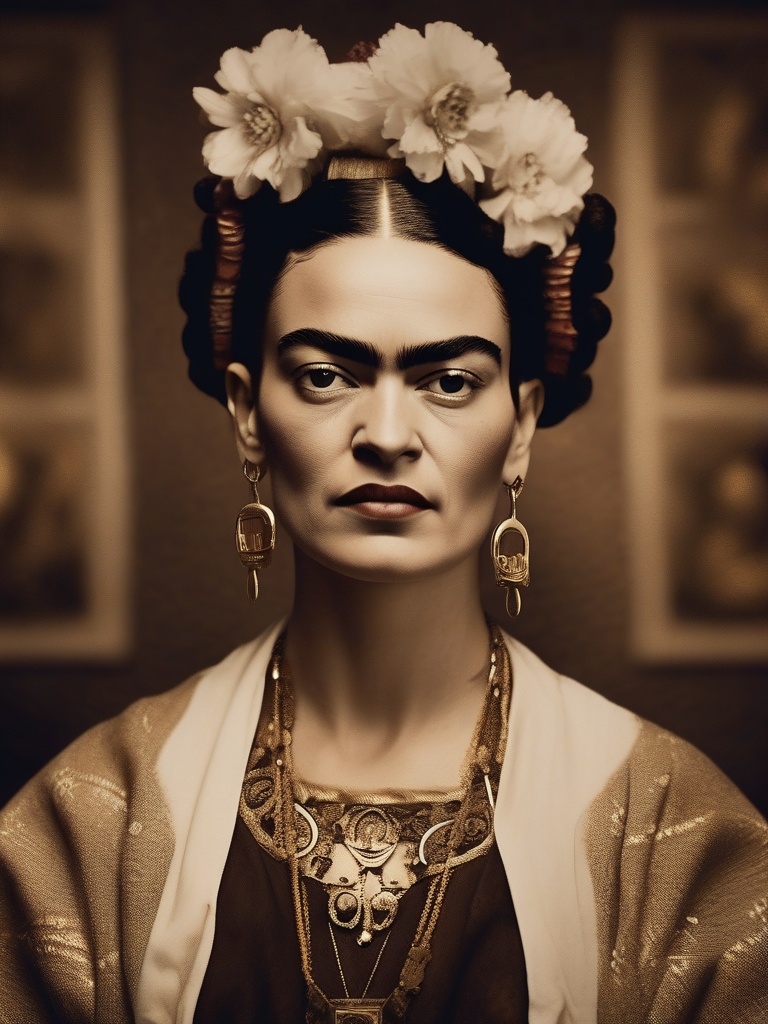
1907 – 1954
I paint my own reality. Through physical agony and emotional storms, Frida Kahlo transformed her pain into art that would define Mexican surrealism and inspire generations. Her unibrow became a symbol of defiance, her self-portraits a raw, honest mirror into the female experience.
Born Magdalena Carmen Frida Kahlo y Calderón in Mexico City. Polio at six left her with a withered leg. But it was a streetcar accident at 18 that shattered her body—metal rail through her pelvis, spine broken in three places. Bedridden for months, she began painting from a specially made easel. Her first subject: herself.
She pursued the famous muralist Diego Rivera, 20 years her senior. Their marriage was tumultuous—both took lovers, Diego with her sister Cristina. Yet their artistic bond was unbreakable. Frida's work grew more personal, more painful, more powerful. The unibrow, the faint mustache—she painted what she saw, rejecting beauty standards.
Her divorce from Rivera produced her most famous work: 'The Two Fridas'—two versions of herself connected by a vein, one in European dress, one in Tehuana costume. That same year, her first solo exhibition in Paris earned praise from André Breton. Surrealism claimed her, but she insisted: 'I never painted dreams. I painted my own reality.'
Remarried to Diego, Frida's health deteriorated. Spinal surgery, amputated leg, corsets of plaster and steel. Yet she kept painting—ex-voto style, vibrant colors, Mexican folk art influences. Her home, La Casa Azul, became a salon for international artists, communists, and intellectuals. She was Mexico's cultural ambassador to the world.
Her only Mexico City solo exhibition came in 1953. Too ill to walk, she arrived by ambulance, installed in a four-poster bed in the gallery. She died at 47 in 1954. Diego said her death was the most tragic day of his life. But Frida's image—those piercing eyes, those flowers, that defiant unibrow—would outlive them all.
I paint myself because I am so often alone and because I am the subject I know best.
— On self-portraits
Feet, what do I need you for when I have wings to fly?
— On overcoming pain
I hope the exit is joyful—and I hope never to return.
— Final diary entry
| Year | Title | Role/Impact | Type |
|---|---|---|---|
| 1926 | Self-Portrait in a Velvet Dress | Art | |
| 1939 | The Two Fridas | Art | |
| 1944 | The Broken Column | Art | |
| 1954 | Viva la Vida | Art | |
| 2002 | Frida (Film) | Film |